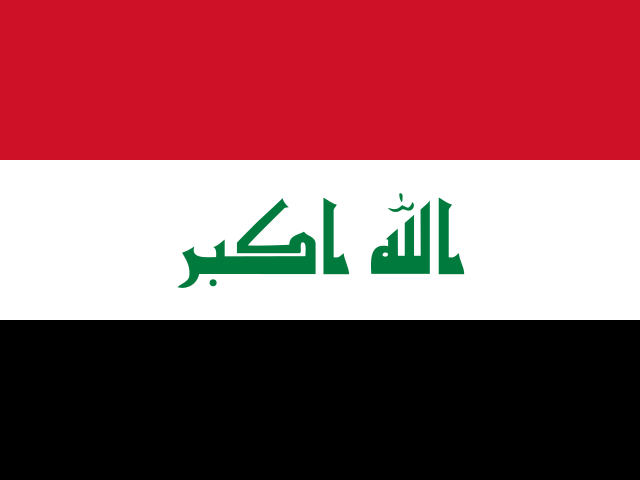
On April 1, 2026, Ali Al-Hamadi received a cross in the 62nd minute against Bolivia and headed it into the net in Monterrey, Mexico. Forty years of waiting was over. Iraq were going to the World Cup. The Lions of Mesopotamia had last played at Mexico 1986 — and they had just qualified for another tournament in North America by beating another South American nation. Graham Arnold's side are the tournament's great returnees, and their squad is one of the most internationally diverse in the competition: a former Manchester United midfielder born in England, a Premier League striker, a Serie A forward on loan in Saudi Arabia, and eight players from Scandinavian leagues all wearing the same shirt.
How Iraq Qualified — 21 Matches, a Bolivia Playoff and 40 Years of Waiting
Iraq played more qualifying matches than any other team at this tournament — 21 in total across three AFC rounds and a FIFA inter-confederation playoff. They won 11 of those AFC qualifiers, advancing through each round before reaching the final playoff, where they were drawn against Bolivia.
On April 1, 2026, in Monterrey, Iraq beat Bolivia 2-1 with goals from Ali Al-Hamadi and Aymen Hussein. The last time Iraq qualified for a World Cup was in 1985, when they earned their place for Mexico 1986. The players and staff who achieved it in 2026 had not been born the last time Iraq's name was on a World Cup squad list.
Graham Arnold, the Australian coach who took charge after Jesús Casas, has spoken publicly about wanting Iraq to shock the world in North America. His coaching staff includes former Manchester United assistant Rene Meulensteen and former Australia goalkeeper Zeljko Kalac — a set-up that blends international expertise with knowledge of the Asian football environment.
Key Players to Watch
The Official Squad: Iqbal's Man United Heritage, Al-Hamadi's Premier League Credentials and a Diaspora Generation
The most compelling player story in the squad is Zidane Iqbal's. Born in Manchester to a Pakistani father and Iraqi mother, he joined Manchester United's academy at nine. In 2022, he became the first British-born South Asian and the first Iraqi to play for the first team. A year later, he became the first British South Asian to appear in the Champions League. He left United in June 2023 for FC Utrecht on a four-year deal. He will be 22 at the World Cup and is the face of what Iraqi football's European diaspora can become.
Ali Al-Hamadi's story carries equal symbolic weight. The Ipswich Town forward is the first Iraqi to play in the Premier League — a milestone that carries enormous significance for a nation that has historically had very few exports to the English top flight. He scored the goal that sent Iraq to the World Cup. His place in Iraqi football history is already written.
One notable absentee is Dario Naamo, the Dundee defender who had played for Finland's youth teams before attempting to switch his sporting nationality to Iraq. FIFA rules disqualified him from selection, ruling that his prior appearances for Finland prevented the move. It is a reminder that the eligibility rules that opened the door for Iqbal and other diaspora players also close it for others.
Group I: France, Senegal and Norway — the Hardest Possible Return
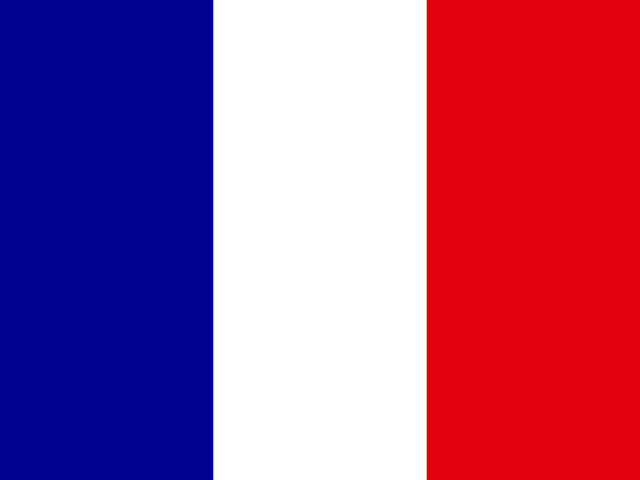
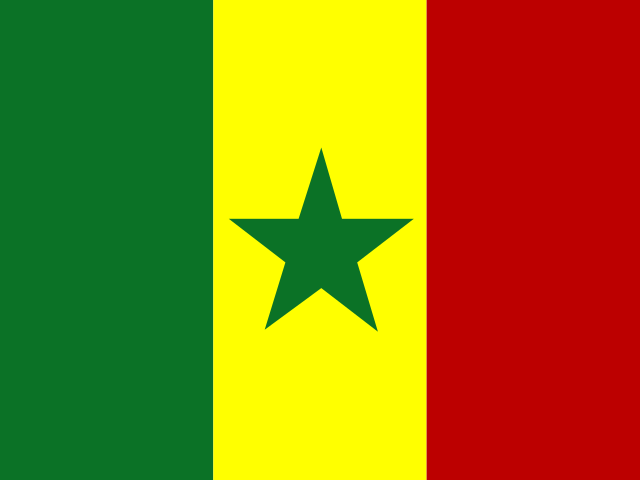
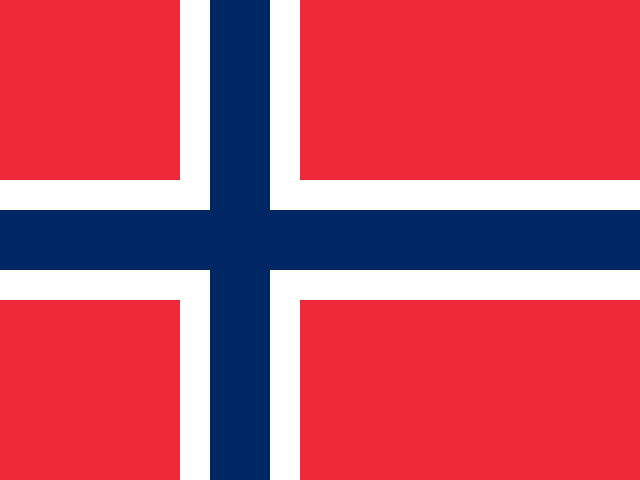
Iraq have been drawn in Group I alongside France, Senegal and Norway. This is about as demanding a group as any returning team could face. France, with Kylian Mbappé, are among the tournament's strongest sides. Senegal, with Sadio Mané, are Africa's most dangerous team. Norway, with Erling Haaland, are opponents who will themselves be targeting progression.
Iraq's first match is against Norway on June 16 at Gillette Stadium in Foxborough. That fixture gives them their best chance of a point or more. The subsequent matches against Senegal and France will test whether Arnold's defensive organisation can contain the most potent attacks in the group. The realistic hope is to be competitive rather than to advance — but 40 years of absence means competitive alone would be genuinely meaningful.
Group I teams:
World Cup History
One to Watch — Zidane Iqbal
Prediction
Think you know how Iraq will do at World Cup 2026?
Pick every match from the group stage to the Final on July 19. Free to play — predictions lock June 11.
World Cup 2026 Bracket Predictor →Collect the WC 2026 Sticker Album
Track your Panini collection, mark duplicates, and find trade partners worldwide.
Open Sticker Album →